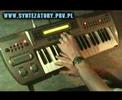
| Korg Prophecy [ download my patches ] / [ browse audio demos ]
|
|
|
 |
X86 Disassembly: Exploring The Relationship Bet... -Managing the to ensure the program doesn't crash upon returning from a function. Security and Debugging Exploring x86 disassembly changes the way a programmer views their code. It demystifies the "magic" of the computer, showing that every complex software system is ultimately just a series of simple movements of data between memory and the CPU. It turns the act of coding from a purely creative exercise into a deep understanding of . x86 Disassembly: Exploring the relationship bet... Understanding this relationship is a superpower in the realm of . Many vulnerabilities, such as buffer overflows , are invisible in high-level source code but become glaringly obvious when looking at how the program manages memory in disassembly. By observing how the instruction pointer (EIP/RIP) is manipulated, researchers can understand how an attacker might hijack a program's execution flow. Conclusion Managing the to ensure the program doesn't crash Disassembly is the process of reversing this translation, turning binary back into human-readable assembly language. By studying this, we can see how a simple if statement becomes a combination of a CMP (compare) and a JNE (jump if not equal) instruction. This reveals the of control flow that are often hidden by modern syntax. The Role of Optimization and the Stack It turns the act of coding from a Furthermore, disassembly highlights the critical role of the and registers . In a high-level language, you simply pass an argument to a function. In x86 disassembly, you see the manual labor involved: Pushing values onto the stack. Moving data into registers like EAX or RDI . One of the most striking aspects of this relationship is how modern . A single line of high-level code might be expanded into ten assembly instructions for safety, or collapsed into two for speed. At its core, a compiler acts as a translator. When it processes high-level code, it strips away the "human" elements—variable names, comments, and complex data structures—and replaces them with a sequence of .
|
 |
 |
|
Watch the video demo:
|