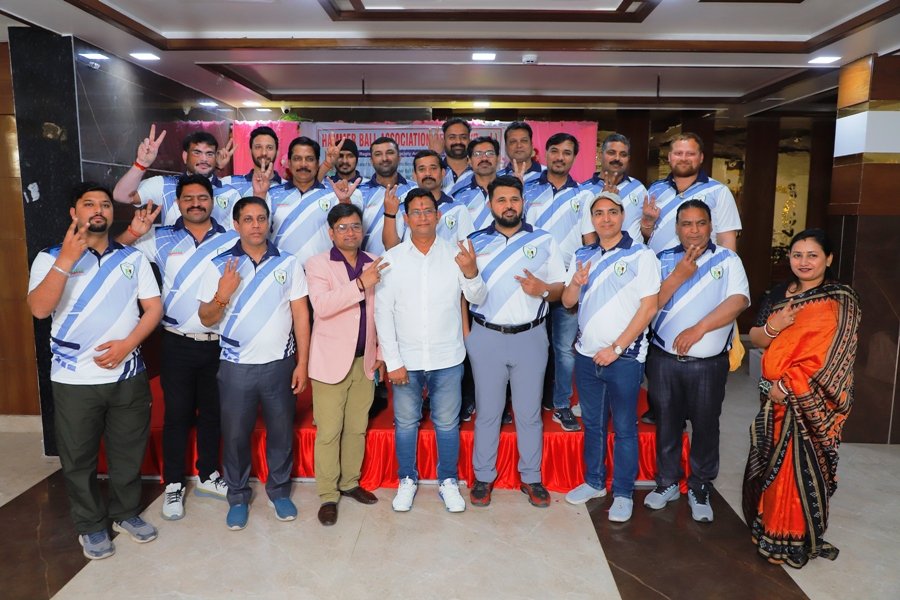
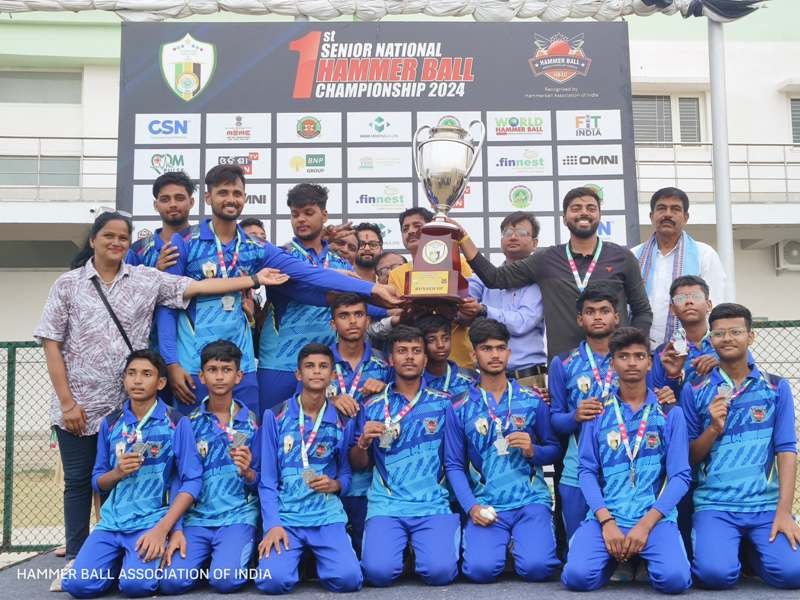
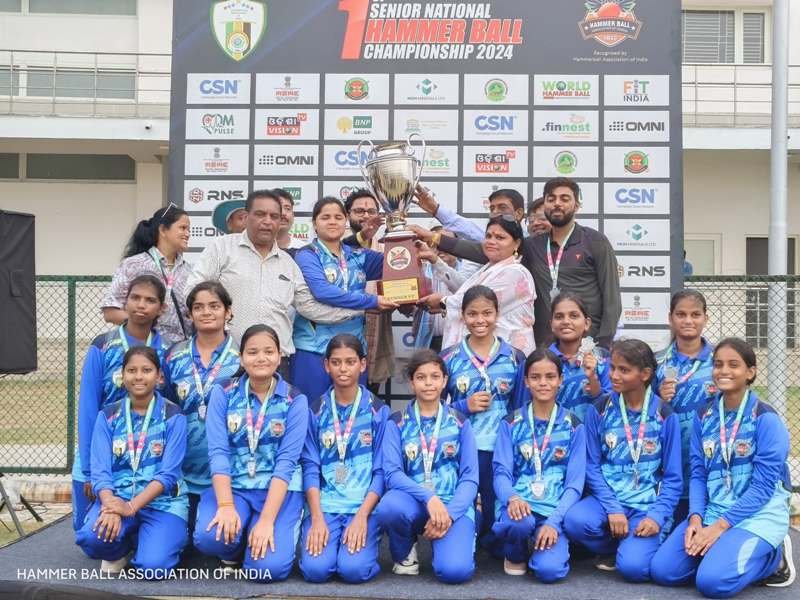

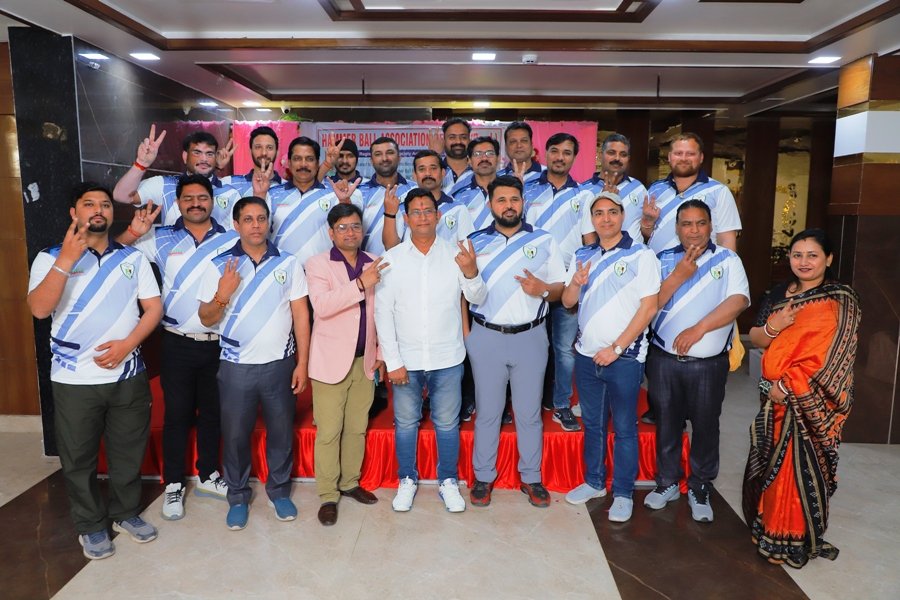
The World Hammer Ball (WHB) is the global governing body for Hammer Ball, and the Hammer Ball Association of India (HBAI) operates under WHB as its national affiliate. We are committed to developing and nurturing Hammer Ball as a recognized sport nationwide. We aim to build a strong sporting culture by organizing district, state, national, and international tournaments, providing training programs, and ensuring fair opportunities for all players.
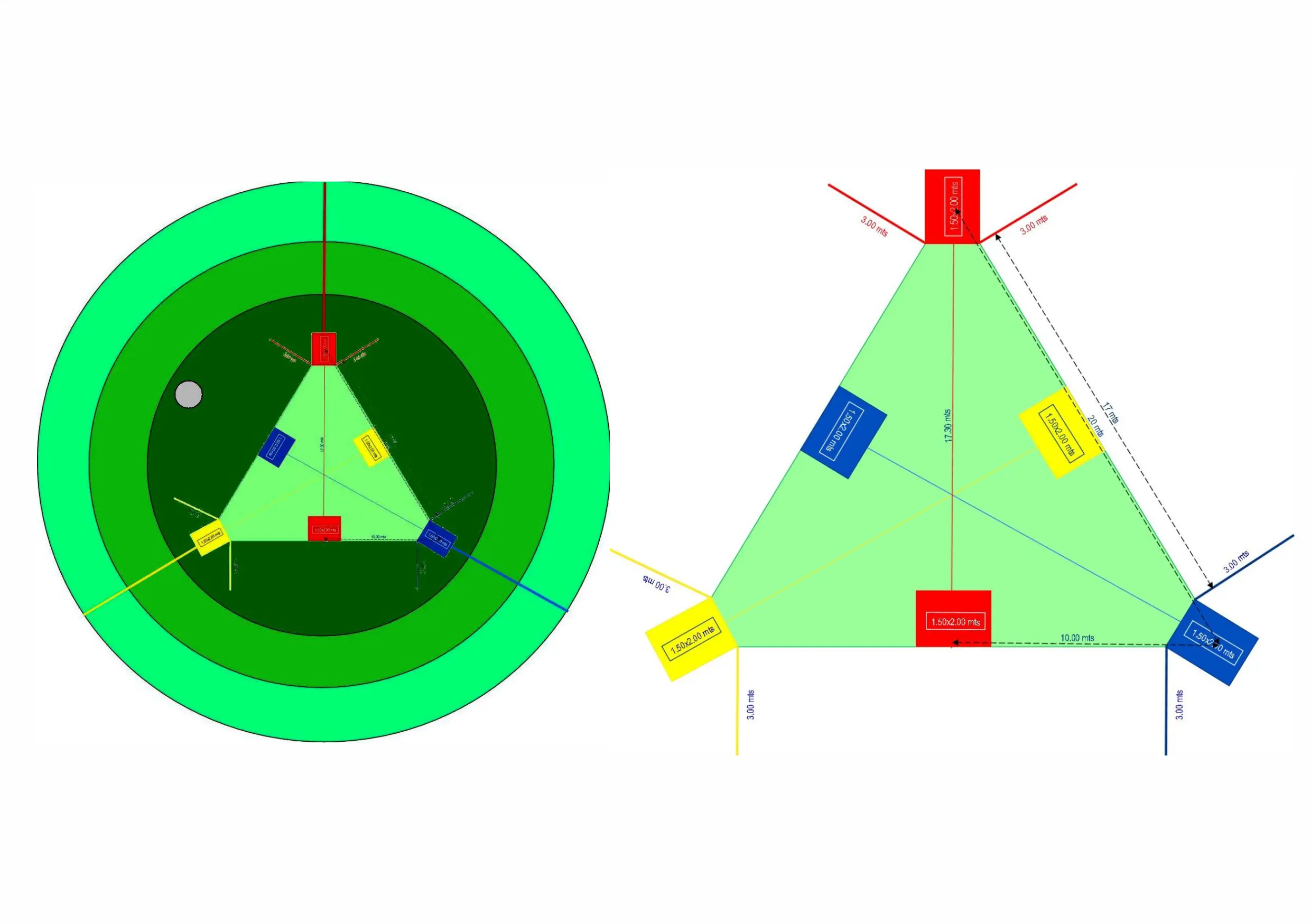
A triangular zone where throwers deliver precise, strategic balls to hitters for scoring powerful runs.
Special corner boxes inside the pitch where skilled hitters position to strike and control the ball effectively.
Marked running paths between hitter zones where players quickly sprint to complete scoring runs after striking.
Fielders positioned smartly in home, inner, and outer fields to stop runs and create dismissals efficiently.
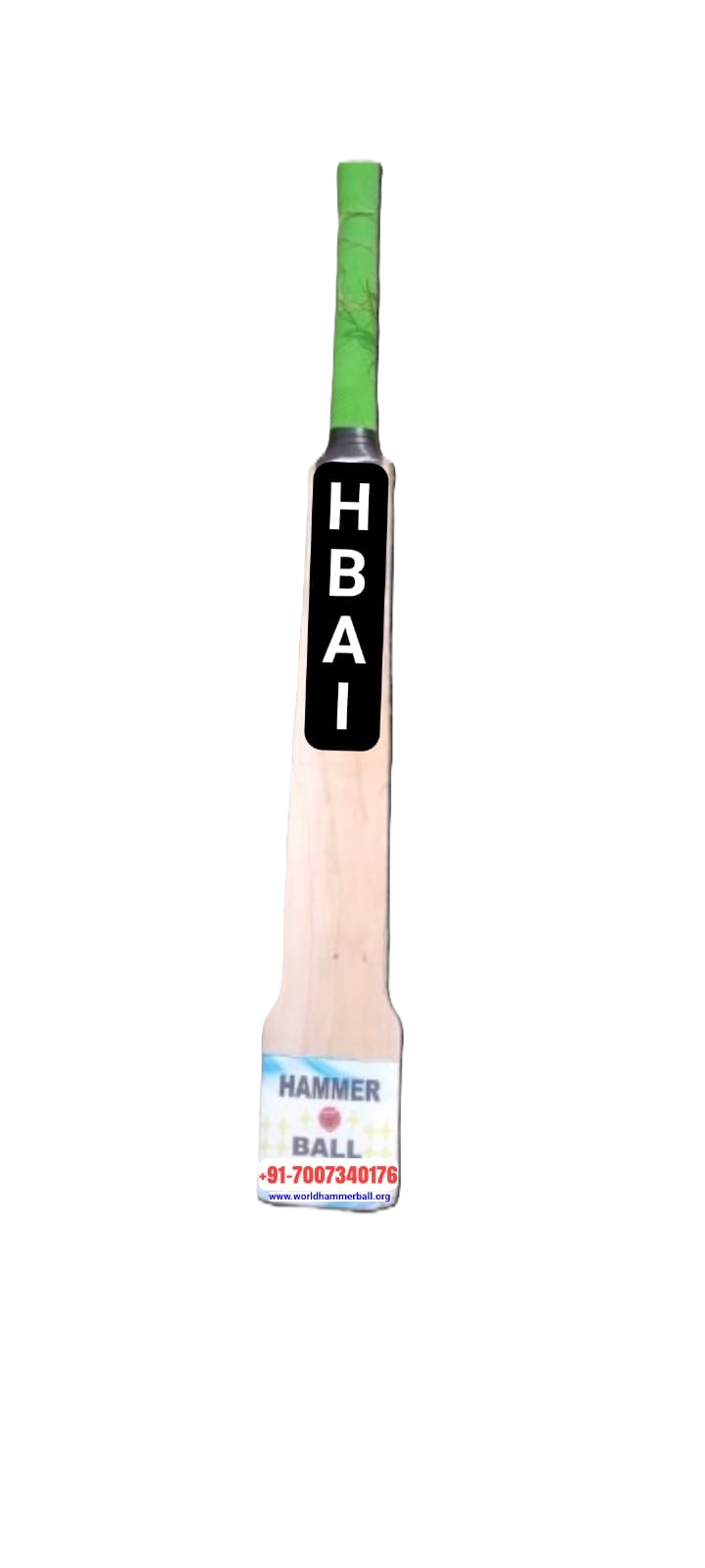
A specially crafted wooden bat designed to strike power shots with control, speed, and long-distance precision.
A double-layered, injury-safe ball (80–120g) built for grip, bounce, durability, and smooth controlled throwing action.
A standard-sized field with well-marked zones, visible boundaries, and structured sections to ensure fair gameplay.
A specialized area near home field where keepers protect, defend goals, and coordinate the team’s defensive strategy.
The essay of "Davet" ultimately highlights a message of hope: no matter how lost or ashamed a person feels, there is always a standing invitation to return to the path of mercy. SEDAT UÇAN (DAVET)
The lyrics describe the soul flowing like a stream toward divine mercy, "winding and turning" ( kıvrıla kıvrıla ). This suggests that the path to spiritual peace is a continuous, natural movement toward the source of life.
The core of "Davet" lies in its humble acknowledgment of human imperfection. The lyrics, "Mahcubum, yüzüm yok ama n’ideyim?" (I am ashamed, I have no face [to show], but what can I do?), speak to a deep sense of spiritual vulnerability. The song portrays the believer not as a perfect being, but as a "servant in need" who recognizes that true healing and guidance—the "remedy and medicine"—only come from a higher power. Key Themes and Metaphors
One of the song's most powerful images is the believer wanting to turn "like a moth" ( pervaneler gibi ) around the divine light. This symbolizes an all-consuming love and a desire to lose one's ego in the presence of the Divine.
As a leading figure in modern ilahi music, Sedat Uçan’s "Davet" serves as more than just a song; it is a musical prayer used for reflection and meditation. By blending traditional themes of humility and divine love with accessible language, Uçan bridges the gap between historical Sufi poetry and contemporary listeners seeking spiritual solace.
"Davet" (The Invitation) is a profound spiritual hymn (ilahi) by the prominent Turkish religious music artist . Known for his soulful voice and devotional themes, Uçan uses "Davet" to explore the universal human journey toward divine grace and repentance. The Essence of Submission
Uçan employs classic Sufi-inspired metaphors to illustrate the soul's yearning:
The title itself, "Davet," refers to responding to God's beautiful invitation ( Güzel davetine uydum ). It frames faith as a proactive choice to step toward "the light" ( ilahi nur ) and seek divine "saturation" ( kanmaya geldim ). Cultural and Spiritual Impact
The essay of "Davet" ultimately highlights a message of hope: no matter how lost or ashamed a person feels, there is always a standing invitation to return to the path of mercy. SEDAT UÇAN (DAVET)
The lyrics describe the soul flowing like a stream toward divine mercy, "winding and turning" ( kıvrıla kıvrıla ). This suggests that the path to spiritual peace is a continuous, natural movement toward the source of life.
The core of "Davet" lies in its humble acknowledgment of human imperfection. The lyrics, "Mahcubum, yüzüm yok ama n’ideyim?" (I am ashamed, I have no face [to show], but what can I do?), speak to a deep sense of spiritual vulnerability. The song portrays the believer not as a perfect being, but as a "servant in need" who recognizes that true healing and guidance—the "remedy and medicine"—only come from a higher power. Key Themes and Metaphors
One of the song's most powerful images is the believer wanting to turn "like a moth" ( pervaneler gibi ) around the divine light. This symbolizes an all-consuming love and a desire to lose one's ego in the presence of the Divine.
As a leading figure in modern ilahi music, Sedat Uçan’s "Davet" serves as more than just a song; it is a musical prayer used for reflection and meditation. By blending traditional themes of humility and divine love with accessible language, Uçan bridges the gap between historical Sufi poetry and contemporary listeners seeking spiritual solace.
"Davet" (The Invitation) is a profound spiritual hymn (ilahi) by the prominent Turkish religious music artist . Known for his soulful voice and devotional themes, Uçan uses "Davet" to explore the universal human journey toward divine grace and repentance. The Essence of Submission
Uçan employs classic Sufi-inspired metaphors to illustrate the soul's yearning:
The title itself, "Davet," refers to responding to God's beautiful invitation ( Güzel davetine uydum ). It frames faith as a proactive choice to step toward "the light" ( ilahi nur ) and seek divine "saturation" ( kanmaya geldim ). Cultural and Spiritual Impact


Delhi |
National Championships
VSMarch 15, 2024
|

Mumbai |

Bangalore |
State Championships
VSApril 20, 2024
|

Chennai |
Delhi |
State Finals
3 : 1Feb 28, 2024
|
Mumbai |
Bangalore |
District Finals
2 : 0Feb 20, 2024
|
Chennai |
HAMMER BALL ASSOCIATION OF INDIA IS GOING TO BE ADD A NEW CHAPTER IN November 2025. THAT IS 2ND JUNIOR NATIONAL (U-19) CHAMPIONSHIP 2025 TO BE HELD SO...
| Pos | State | P | W | L | PTS |
|---|---|---|---|---|---|
| 1 | Puducherry | 0 | 0 | 0 | 0 |
| 2 |  Jharkhand Jharkhand | 0 | 0 | 0 | 0 |
| 3 |  West Bengal West Bengal | 0 | 0 | 0 | 0 |
| 4 |  Uttar Pradesh Uttar Pradesh | 0 | 0 | 0 | 0 |
| 5 |  Tripura Tripura | 0 | 0 | 0 | 0 |
| 6 |  Tamil Nadu Tamil Nadu | 0 | 0 | 0 | 0 |
| 7 |  Rajasthan Rajasthan | 0 | 0 | 0 | 0 |
| 8 |  Punjab Punjab | 0 | 0 | 0 | 0 |