
TrainYourEars EQ Edition is an ear training software for Mac and PC designed to help you understand equalisers and frequencies like never before.

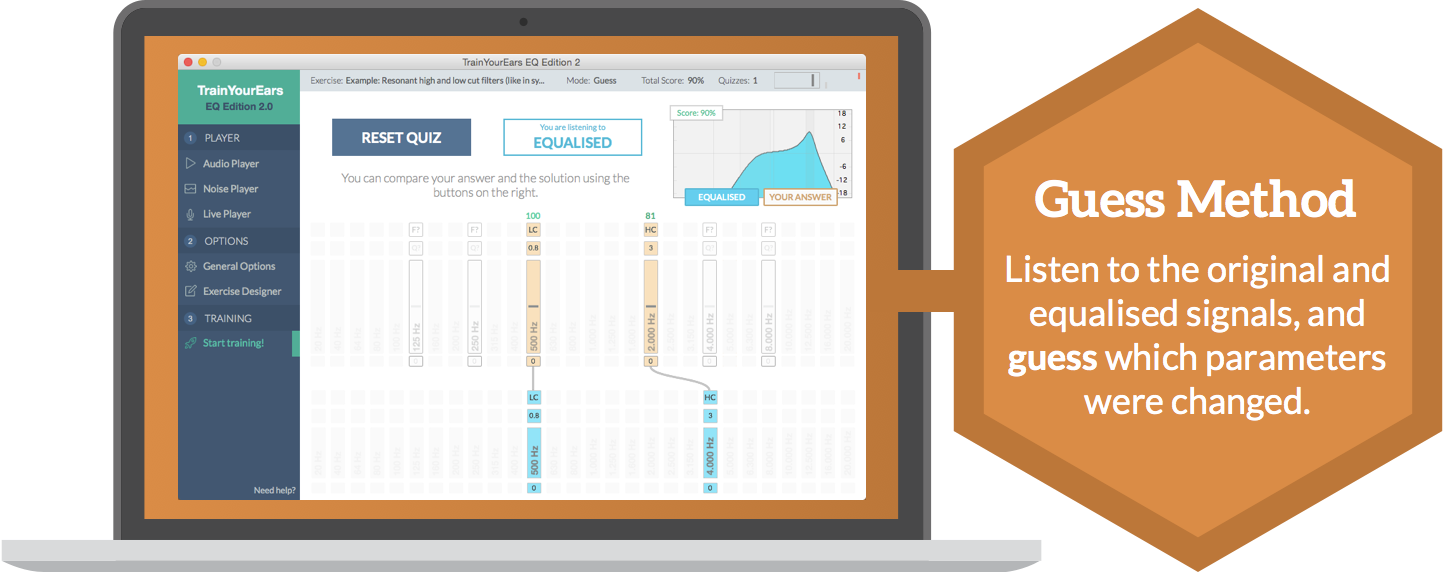
It speeds up your learning process exposing you to hundreds of random equalizations you have to guess. If you are wrong, it will let you know “how wrong”, and it will let you hear both your guess and the correct answer.
In no time you will develop a frequency memory which will allow you to connect the sound you imagine in your head with the parameters you need to dial, quickly and easily than ever.
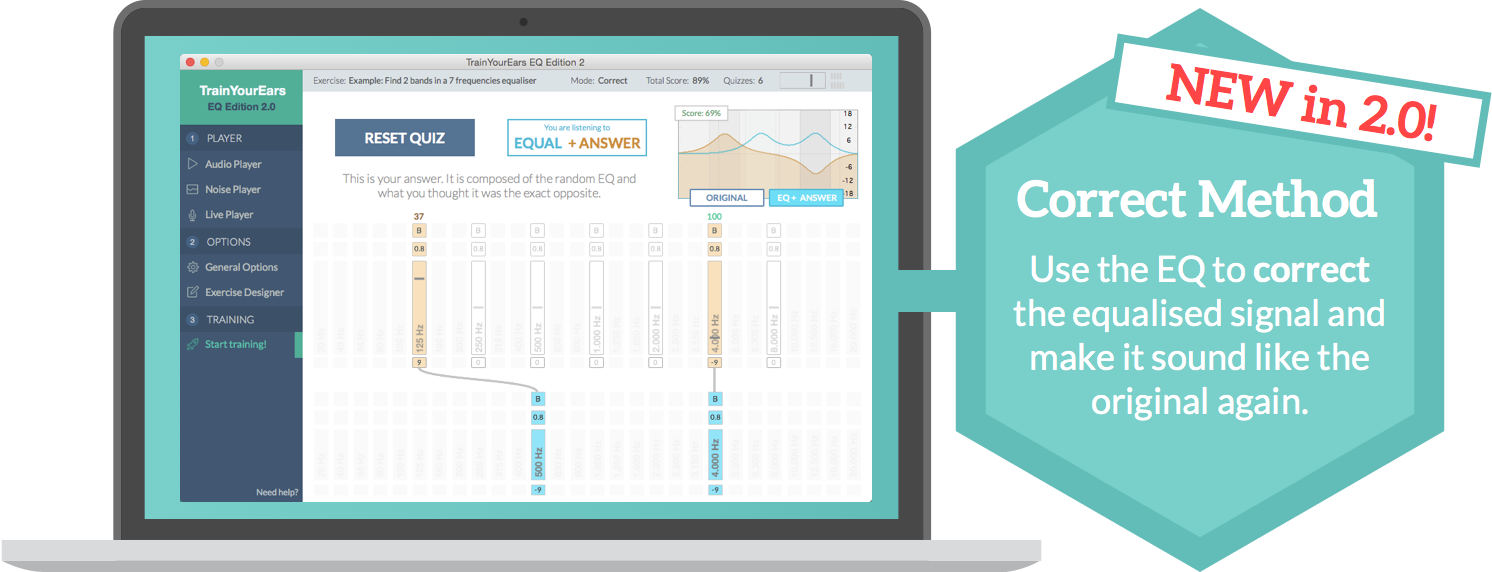
It has a brand new training method. Instead of guessing, you have to make corrections while you hear the result.
The person who suggested this method to us in the first place was Bob Katz, a renowned mastering guru. We tested it, we loved it, so here it is for all you to enjoy!
Besides it has a new, modern and clean interface, a new assisted training screen, a new exercise designer, it supports other languages, and many other features.
The ability to connect what is in your mind with the appropriate parameters you have to dial to get that sound is not an easy task. The steps involved should be:
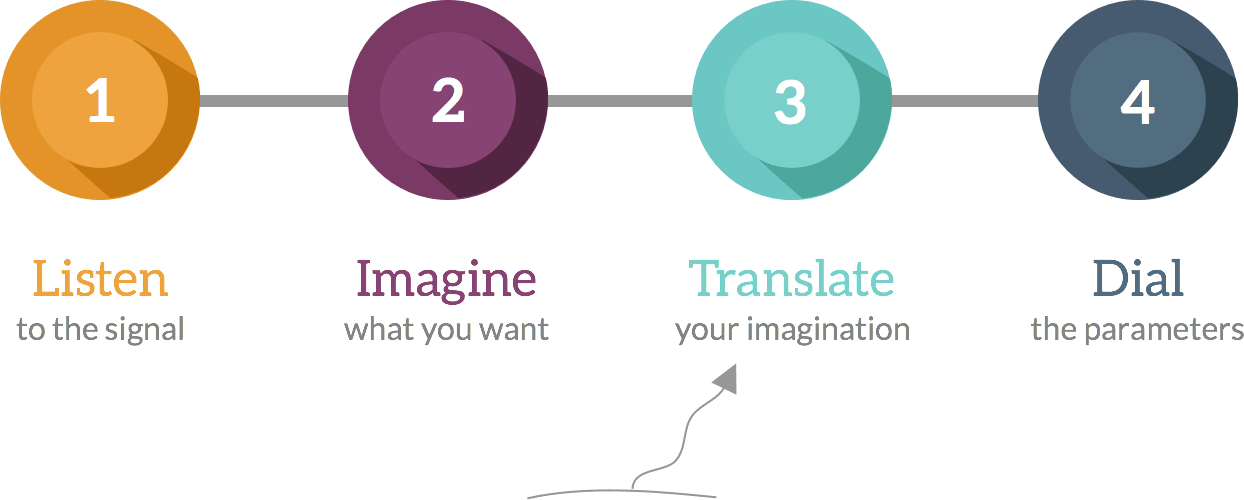
Sometimes people get lost in the translation step and start turning knobs without confidence. The more you work, the better you understand what those knobs really do, but it is a slow process.
People excel in this matter after many years, because they have learned experimenting with lots of different processes applied to lots of different sources. The purpose of this training is to open your ears to what each frequency sounds like and reduce the amount of time needed to acquire this knowledge.
In 15 minutes you can guess or correct 100 random equalisations, so training every day for a few weeks is equivalent to accumulating the experience of many years.
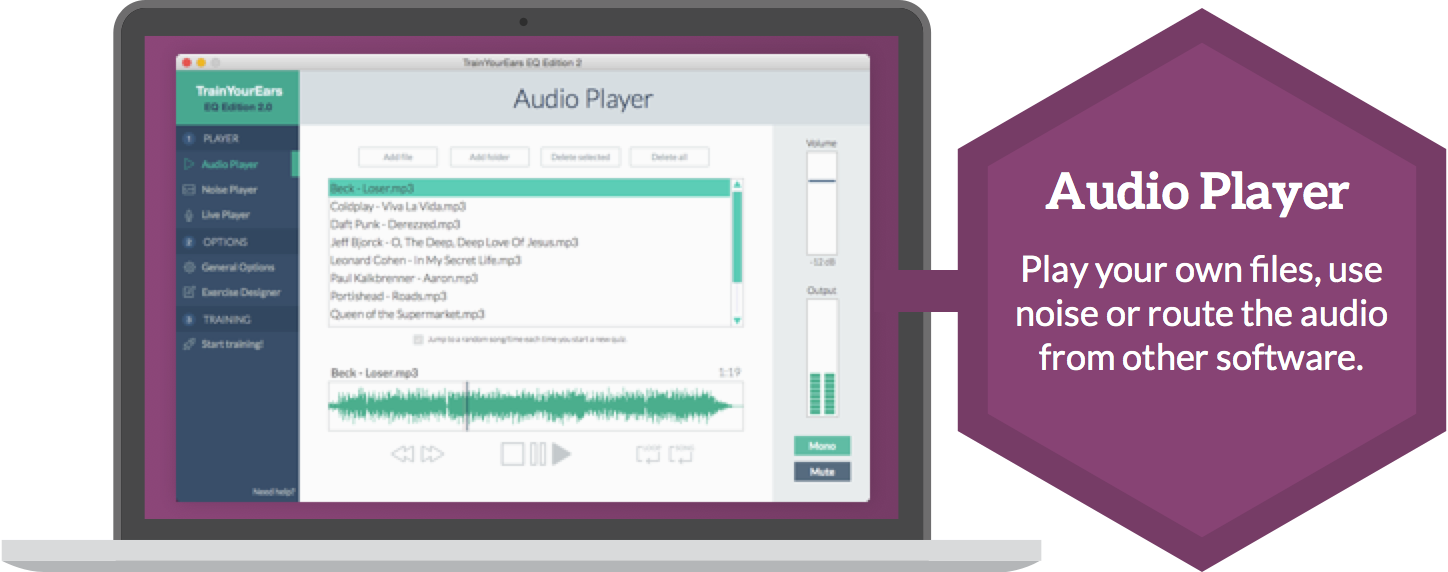
First, you load the music you want to train with:
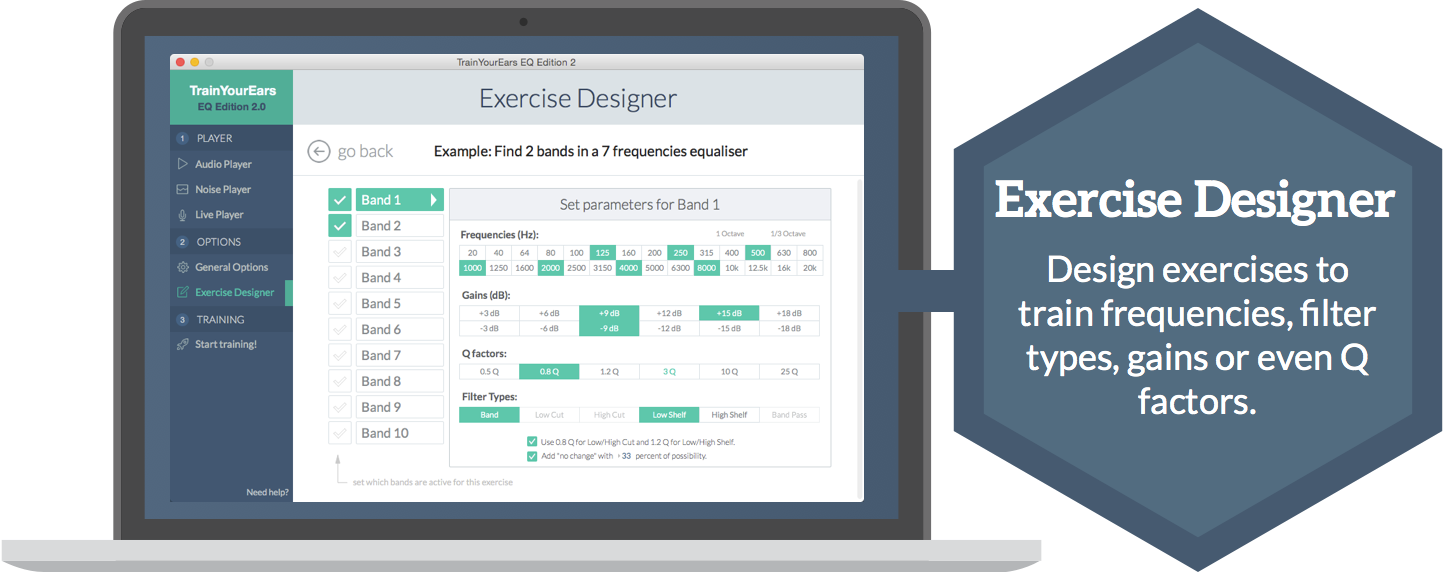
Then, you choose an exercise or design a new one:
And finally, train your ears with one of these two methods!
Wanna see more?
Elara shared the "Otss_victoria.mp4" file with the Coastal Reclamation Project. By extracting the algorithm from the video's audio layer, engineers were able to reboot the local early-warning systems for the rising tides.
Never delete the "junk" until you understand its rhythm.
The file name was a relic of the "Old Tech Search System" (OTSS). During the Great Migration to the cloud in the 2030s, millions of personal memories were compressed and tagged with these cryptic headers. "Victoria" wasn’t just a name; it was a destination. When Elara finally bypassed the legacy encryption, the video didn't show a person, but a panoramic view of a coastal town that no longer appeared on modern maps. 2. The Hidden Message
What started as a cryptic, archived file became the "Victoria Protocol." It proved that the most useful tools are often hidden in the things we nearly throw away, waiting for someone to look past the file extension.
In the quiet, humming server room of the Global Archive, a single file sat nestled in a forgotten directory: . To most, it looked like a corrupt media file, but to Elara, a digital historian, it was a ghost she had been chasing for years. 1. The Discovery
As the video played, Elara noticed the "useful" part of the story. It wasn't a family vacation video. Every ten seconds, the camera lingered on specific landmarks—a lighthouse, a rusted pier, a weathered bronze statue. By cross-referencing the timestamps with the OTSS metadata, Elara realized the file was a visual map.
Embedded in the audio track, barely audible beneath the sound of crashing waves, was a steady rhythmic pulse. It was a digital "seed"—a backup of an open-source weather algorithm designed to predict tidal surges, lost when the original servers went offline decades ago. 3. The Restoration
Elara shared the "Otss_victoria.mp4" file with the Coastal Reclamation Project. By extracting the algorithm from the video's audio layer, engineers were able to reboot the local early-warning systems for the rising tides.
Never delete the "junk" until you understand its rhythm. Otss victoriamp4
The file name was a relic of the "Old Tech Search System" (OTSS). During the Great Migration to the cloud in the 2030s, millions of personal memories were compressed and tagged with these cryptic headers. "Victoria" wasn’t just a name; it was a destination. When Elara finally bypassed the legacy encryption, the video didn't show a person, but a panoramic view of a coastal town that no longer appeared on modern maps. 2. The Hidden Message Elara shared the "Otss_victoria
What started as a cryptic, archived file became the "Victoria Protocol." It proved that the most useful tools are often hidden in the things we nearly throw away, waiting for someone to look past the file extension. The file name was a relic of the
In the quiet, humming server room of the Global Archive, a single file sat nestled in a forgotten directory: . To most, it looked like a corrupt media file, but to Elara, a digital historian, it was a ghost she had been chasing for years. 1. The Discovery
As the video played, Elara noticed the "useful" part of the story. It wasn't a family vacation video. Every ten seconds, the camera lingered on specific landmarks—a lighthouse, a rusted pier, a weathered bronze statue. By cross-referencing the timestamps with the OTSS metadata, Elara realized the file was a visual map.
Embedded in the audio track, barely audible beneath the sound of crashing waves, was a steady rhythmic pulse. It was a digital "seed"—a backup of an open-source weather algorithm designed to predict tidal surges, lost when the original servers went offline decades ago. 3. The Restoration
Final price was 89€, but the 49€ launch offer was such a success that we sold twice as many as we expected.
After a lot of thought we decided to keep this reduced price forever :)
Thanks to all the people who has supported this project so far and made this possible!




Trusted by thousands of students and teachers from the world’s top universities.