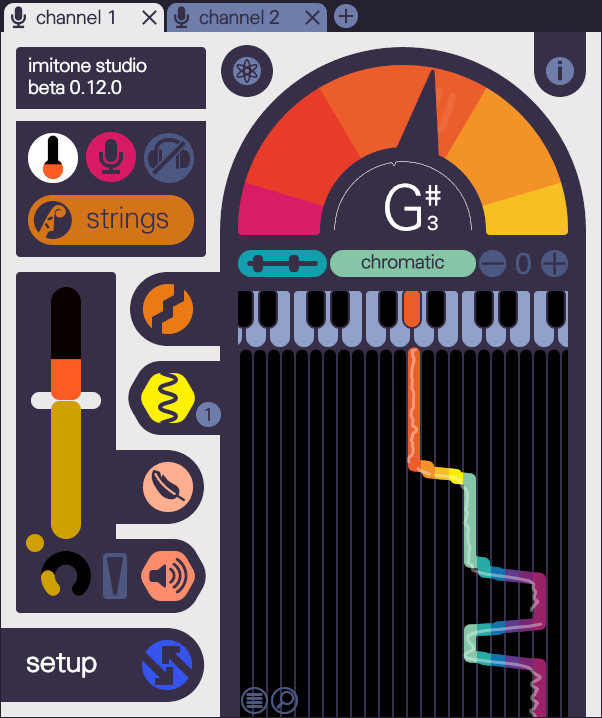
play any instrument with your voice.
explore and create music with only a microphone.


A central motif in the lyrics is that while the physical body might travel to "foreign lands" ( ellere ), the heart remains trapped by love: "Ama senden ayrı gezen / Yürek değil, beden oldu" (But it is not the heart, but the body that wanders away from you). Listening & Performance
The track is available on major streaming platforms like Spotify and Apple Music . You can also find the original music video on YouTube . Cultural Context Jale ParД±ltД± Ellerini Г‡ekip Benden
While Jale Parıltı's 2004 rendition is widely popular, the song is a standard in Turkish folk and pop-fantasy music. It has been covered by various artists, including Gülay and Halil Babür, highlighting its status as a timeless piece of Turkish musical heritage. A central motif in the lyrics is that
Jale Parıltı’s version is known for its emotional depth and traditional melodic structure, often associated with the Nihavent or Uşşak makams common in her repertoire. Cultural Context While Jale Parıltı's 2004 rendition is
Damardan (2004), released under Çobanoğlu Prodüksiyon. Genre: Fantezi / Arabesque.
is a classic of the Turkish "Fantezi" (Fantasy) music genre, famously performed by Jale Parıltı on her 2004 album, Damardan . The song is a poignant lamentation on separation and the longing for a lost loved one. Song Overview Artist: Jale Parıltı.
A central motif in the lyrics is that while the physical body might travel to "foreign lands" ( ellere ), the heart remains trapped by love: "Ama senden ayrı gezen / Yürek değil, beden oldu" (But it is not the heart, but the body that wanders away from you). Listening & Performance
The track is available on major streaming platforms like Spotify and Apple Music . You can also find the original music video on YouTube . Cultural Context
While Jale Parıltı's 2004 rendition is widely popular, the song is a standard in Turkish folk and pop-fantasy music. It has been covered by various artists, including Gülay and Halil Babür, highlighting its status as a timeless piece of Turkish musical heritage.
Jale Parıltı’s version is known for its emotional depth and traditional melodic structure, often associated with the Nihavent or Uşşak makams common in her repertoire.
Damardan (2004), released under Çobanoğlu Prodüksiyon. Genre: Fantezi / Arabesque.
is a classic of the Turkish "Fantezi" (Fantasy) music genre, famously performed by Jale Parıltı on her 2004 album, Damardan . The song is a poignant lamentation on separation and the longing for a lost loved one. Song Overview Artist: Jale Parıltı.