


Acdc.7z

Since its creation in 1997, elBullitaller’s aim has been to expand the range of textures that can be used in the kitchen. As a result of this research, techniques such as foams, clouds, etc. have been created, representing an evolution in his style.
The Texturas range is essential if you want to incorporate some of our most famous techniques into your kitchen, such as hot jellies, air, gelatine caviar or spherical ravioli.
The products that make up the five families – Spherification, Gelification, Emulsification, Thickeners and Surprises – are the result of a rigorous selection and testing process. Texturas is the beginning of a world of magical sensations that has expanded over the years.
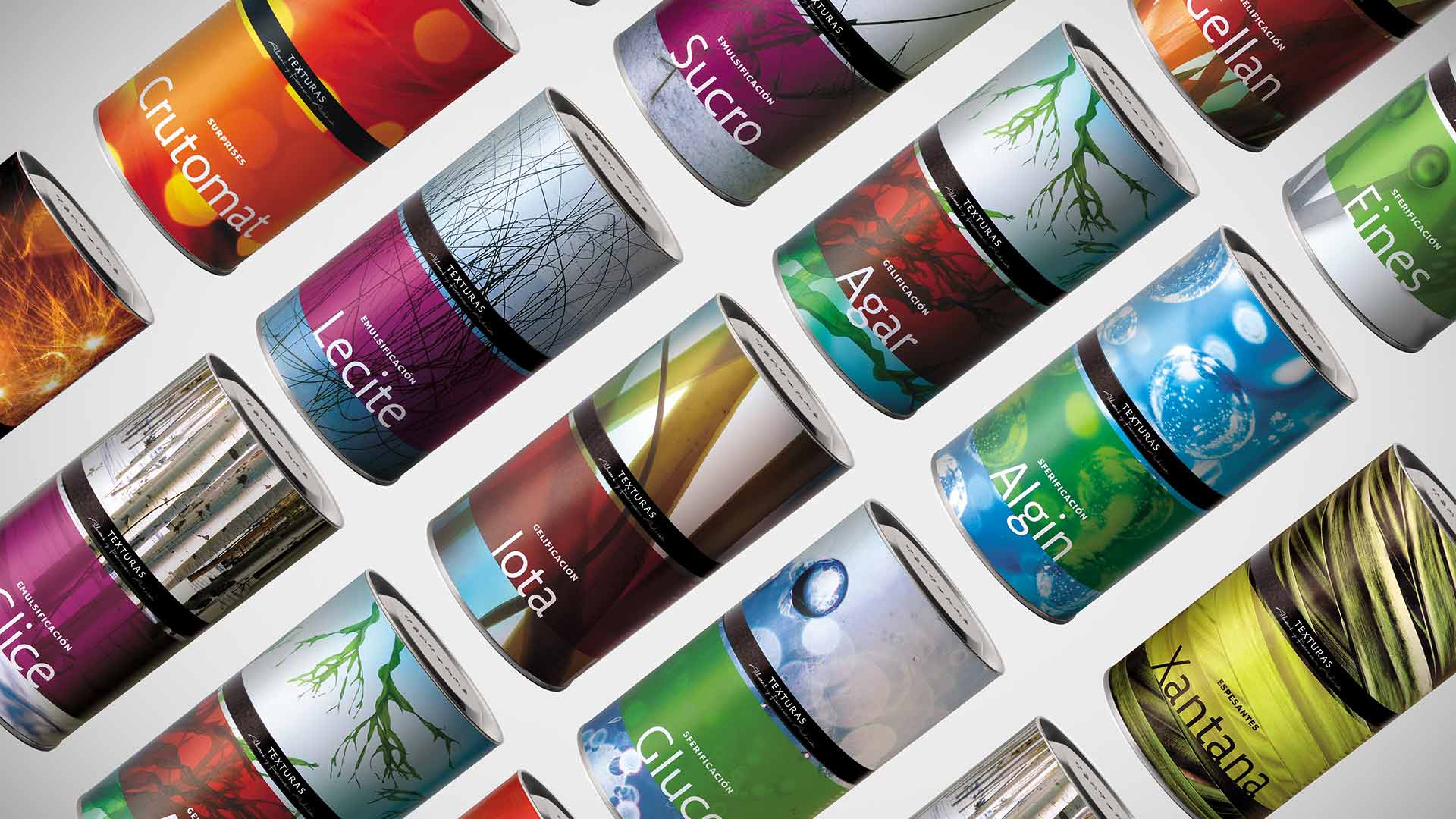
SFERIFICATION
Spherification is a spectacular culinary technique, introduced at elBulli in 2003, that allows you to create recipes never before imagined. It is the controlled gelling of a liquid which, when immersed in a bath, forms spheres. There are two types: Basic Spherification (which consists of immersing a liquid with algin in a calcic bath) and Reverse Spherification (immersing a liquid with gluco in an algin bath). These techniques make it possible to obtain spheres of different sizes: caviar, eggs, gnocchi, ravioli… In both techniques, the spheres obtained can be manipulated as they are slightly flexible. We can introduce solid elements into the spheres, which remain suspended in the liquid, thus obtaining two or more flavours in one preparation. In basic spherification, some ingredients require the use of citrus to correct the acidity; in reverse spherification, xanthan is usually used to thicken. Spherification requires the use of specific tools, which are included in the kits.

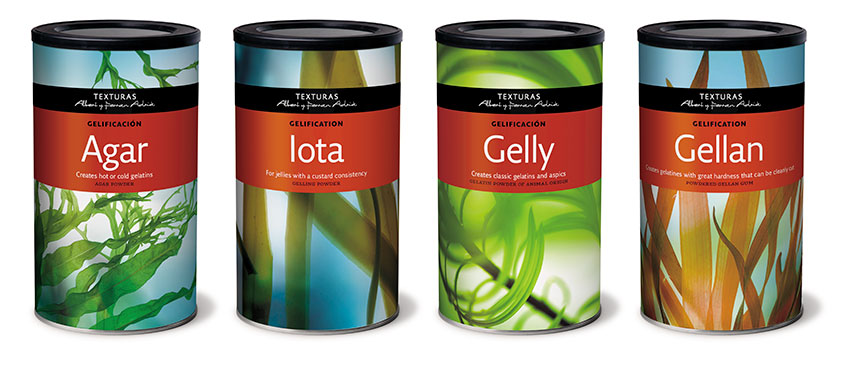
GELLING
Jellies are one of the most characteristic preparations of classical cuisine and have evolved with modern cuisine. Until a few years ago, they were mainly made with gelatin sheets (known as “fish tails”); since 1997, agar, a derivative of seaweed, has been used.
The kappa and iota carrageenans are also obtained from seaweed and have specific properties of elasticity and firmness that give them their own personality.
To complete the family, we present gellan, which makes it possible to obtain a rigid and firm gel, and methyl, with high gelling power and great reliability.
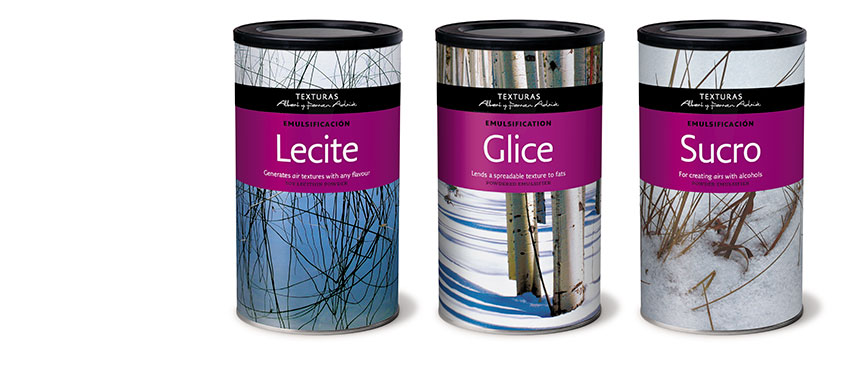
EMULSIFICATION
The Lecite product, which is used to make aerated preparations, has been joined by two other products, Sucro and Glice. The main feature of the latter is its ability to combine two phases that cannot be mixed, such as fatty and aqueous media. This makes it possible to create emulsions that would otherwise be very difficult to achieve. ACDC.7z
THICKENERS
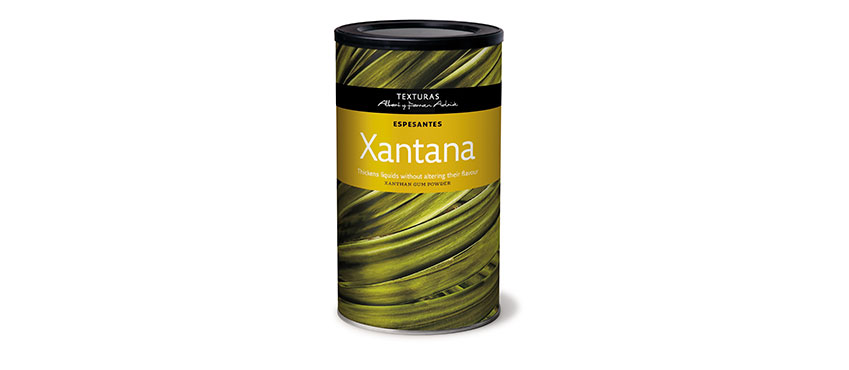
Products have always been used in the kitchen to thicken sauces, creams, juices, soups, etc. Starch, cornstarch, flour are the traditional thickeners used, with the disadvantage that a significant amount has to be added, which affects the final flavour.
With the Xantana family of thickeners, we present a new product capable of thickening cooking preparations with a minimum quantity and without altering the initial flavour characteristics in any way.
SURPRISES
It is a line of products whose main characteristic is the possibility of consuming them directly, either on their own or mixed with other ingredients and preparations. Arthur, a low-level archivist for a dying music
These are products with different characteristics, but with a common denominator, their special texture, specific and unique to each of them, effervescent in the case of Fizzy, Malto and Yopol, and crunchy in Crumiel, Trisol and Crutomat. Flavours and textures that can be a fantastic and surprising solution for refining both sweet and savoury recipes.

OTHER PRODUCTS



Arthur, a low-level archivist for a dying music label, found the file on an old, decommissioned server. While most .7z files are mundane, this one was massive—nearly 400 gigabytes—and encrypted with a 64-character key. The only clue was a text file in the same directory titled FOR_THE_NEXT_GEN.txt , containing a single line: "The rhythm is in the grounding." The Unpacking
The last file in the archive, STRIKE_ZERO.wav , was recorded on a night a massive supercell passed over Elias’s laboratory. Arthur hit play. There was no sound at first, just a deep, subsonic pressure that made his teeth ache. Then, the office lights began to hum in perfect sync with the rhythm. The Aftermath
The file wasn't just a compressed archive of high-voltage rock; it was the digital ghost of a man named Elias Thorne, an eccentric audio engineer who vanished in 1998. The Discovery
Arthur didn't finish the track. As the volume swelled, the "Direct Connection" Elias sought finally manifested. The workstation didn't just crash; it vaporized in a localized surge of blue static. When the fire department arrived, the server was gone, leaving only a scorched outline of a man sitting in a chair.
The "story" within the archive was a diary of Elias’s obsession. He believed that if you could capture the exact frequency of a lightning bolt and play it back through a specific acoustic arrangement, you could create "limitless resonance"—a sound that never stopped vibrating.
Arthur spent weeks trying to crack it. He realized "grounding" wasn't a metaphor; he had to physically wire his workstation to the building’s old copper grounding rods to bypass a custom hardware-lock Elias had built into the server's BIOS.
Now, rumors circulate on deep-web forums about a mirror of floating on a private tracker. They say if you listen to it with the right headphones, you don't just hear the music—you become the conductor.
When the file finally extracted, it didn’t contain MP3s or FLACs. It contained thousands of proprietary sensor data files labeled by date and weather condition. Elias hadn't been recording the band AC/DC; he had been recording —the literal electrical "music" of lightning strikes. The "Full Story"
Arthur, a low-level archivist for a dying music label, found the file on an old, decommissioned server. While most .7z files are mundane, this one was massive—nearly 400 gigabytes—and encrypted with a 64-character key. The only clue was a text file in the same directory titled FOR_THE_NEXT_GEN.txt , containing a single line: "The rhythm is in the grounding." The Unpacking
The last file in the archive, STRIKE_ZERO.wav , was recorded on a night a massive supercell passed over Elias’s laboratory. Arthur hit play. There was no sound at first, just a deep, subsonic pressure that made his teeth ache. Then, the office lights began to hum in perfect sync with the rhythm. The Aftermath
The file wasn't just a compressed archive of high-voltage rock; it was the digital ghost of a man named Elias Thorne, an eccentric audio engineer who vanished in 1998. The Discovery
Arthur didn't finish the track. As the volume swelled, the "Direct Connection" Elias sought finally manifested. The workstation didn't just crash; it vaporized in a localized surge of blue static. When the fire department arrived, the server was gone, leaving only a scorched outline of a man sitting in a chair.
The "story" within the archive was a diary of Elias’s obsession. He believed that if you could capture the exact frequency of a lightning bolt and play it back through a specific acoustic arrangement, you could create "limitless resonance"—a sound that never stopped vibrating.
Arthur spent weeks trying to crack it. He realized "grounding" wasn't a metaphor; he had to physically wire his workstation to the building’s old copper grounding rods to bypass a custom hardware-lock Elias had built into the server's BIOS.
Now, rumors circulate on deep-web forums about a mirror of floating on a private tracker. They say if you listen to it with the right headphones, you don't just hear the music—you become the conductor.
When the file finally extracted, it didn’t contain MP3s or FLACs. It contained thousands of proprietary sensor data files labeled by date and weather condition. Elias hadn't been recording the band AC/DC; he had been recording —the literal electrical "music" of lightning strikes. The "Full Story"


© Albert Adrià, 2026
© 2026 — Pioneer Pulse


